
Introduction
You have probably heard the complaint: "The AI gave me wrong information." Or: "It doesn't know about our company policies." Or: "It's working with outdated data." These are real and legitimate criticisms of large language models used in isolation.
The solution to all of these problems has a name: Retrieval Augmented Generation, or RAG.
RAG is arguably the most important architectural pattern in enterprise AI today. It is the technology that allows AI systems to go beyond the knowledge baked into their training data â reaching into your own documents, databases, and real-time information sources to answer questions with accuracy and precision.
If you are building any kind of AI application for business â an internal knowledge bot, a customer support assistant, a document analysis tool â understanding RAG is not optional. It is essential.
The Problem RAG Solves
To understand why RAG matters, you need to understand the fundamental limitation of standard LLMs.
Large language models are trained on massive datasets collected up to a certain point in time. Once training is complete, their knowledge is frozen. They do not know what happened yesterday. They do not know the contents of your company's internal documents. They do not know your product catalog, your customer database, or your latest pricing structure.
Additionally, LLMs sometimes "hallucinate" â generating plausible-sounding but factually incorrect answers when they do not have reliable information. In casual use, this is annoying. In a business context â especially in legal, financial, medical, or customer-facing applications â it is unacceptable.
The naive solutions do not work well: - Fine-tuning the model on your data is expensive, slow, and requires retraining every time your information changes - Stuffing everything into the context window is inefficient, costly, and impractical for large knowledge bases - Relying on the model's built-in knowledge fails for proprietary, recent, or highly specific information
RAG solves all of these problems elegantly.
What Is RAG? A Plain-English Explanation
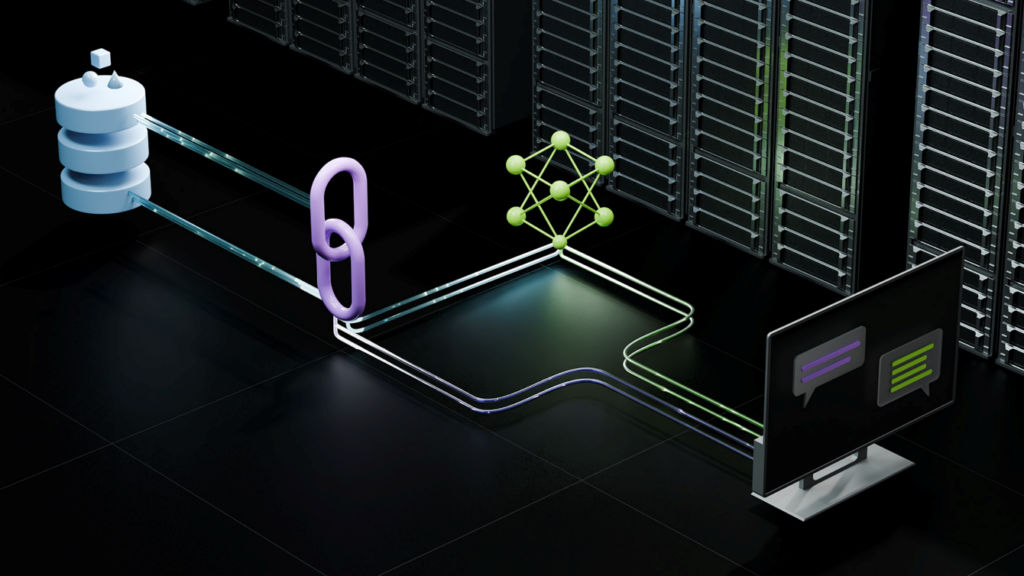
Retrieval Augmented Generation (RAG) is a technique that enhances an LLM's ability to answer questions by first retrieving relevant information from an external knowledge base, then using that information as context when generating a response.
Here is the simple version:
User asks a question
The system searches a knowledge base (your documents, databases, web sources) for relevant information
That information is fed to the LLM along with the original question
The LLM generates an answer grounded in the retrieved information
Instead of relying solely on what the model learned during training, RAG gives the model fresh, relevant, accurate context â right at the moment the question is asked.
Think of it like this: instead of asking a person to answer a question purely from memory, you hand them the right document to reference before they respond. The answer is far more likely to be accurate, specific, and current.
How RAG Works: A Technical Deep Dive
For those who want to understand the mechanics, here is what happens under the hood in a RAG system:
Step 1: Document Ingestion and Indexing
Before RAG can work, your knowledge base needs to be indexed. This process:
Collects documents from various sources (PDFs, Word docs, web pages, databases, support tickets, wikis, etc.)
Splits documents into smaller chunks (typically a few hundred to a couple of thousand tokens each)
Converts each chunk into a numerical representation called an embedding â essentially a mathematical fingerprint of the meaning of that text
Stores these embeddings in a vector database (examples: Pinecone, Weaviate, Chroma, Qdrant, Milvus)
The vector database enables fast semantic search â finding content that is conceptually related to a query, not just keyword-matched.
Step 2: Query Processing
When a user asks a question:
The question is converted into an embedding using the same model that embedded the documents
The vector database performs a similarity search to find the chunks of text whose embeddings are most similar to the question embedding
The top-K most relevant chunks are retrieved (typically 3â10 chunks)
Step 3: Context Augmentation
The retrieved chunks are assembled into a structured context block. This context, along with the original question and appropriate instructions, forms the prompt sent to the LLM.
A typical augmented prompt looks like:
You are a helpful assistant. Use only the following context to answer the question.
If you cannot find the answer in the context, say so clearly.

CONTEXT:
[retrieved chunk 1]
[retrieved chunk 2]
[retrieved chunk 3]

QUESTION:
[user's original question]
Step 4: Generation
The LLM reads the context and generates an answer grounded in that information. Because the relevant facts are directly in the prompt, the model does not need to rely on (potentially incorrect) memorized knowledge.
Step 5: Citation and Verification (Optional but Recommended)
Advanced RAG systems include source attribution â telling the user which document or chunk the answer came from. This allows users to verify the AI's response and builds trust in the system.
Types of RAG Architectures
As RAG has matured, several architectural patterns have emerged for different use cases:
Naive RAG
The basic retrieve-then-generate pattern described above. Works well for straightforward Q&A tasks with a reasonably well-structured knowledge base.
Advanced RAG
Adds preprocessing and post-processing steps to improve retrieval quality: - Query expansion: Rewriting or expanding the user's query to capture more relevant documents - Re-ranking: After initial retrieval, a second model ranks the results by relevance before sending to the LLM - Hybrid search: Combining semantic (vector) search with keyword (BM25) search for better coverage
Modular RAG
A more flexible architecture where different components (retriever, reader, reranker, generator) can be swapped and combined. This is the approach used in production enterprise systems where you need to optimize each component independently.
Agentic RAG
Combines RAG with AI agent capabilities. Instead of a single retrieval step, an agent can decide when and how to retrieve information, run multiple searches with different queries, and combine information from multiple sources dynamically. This is the cutting edge of RAG and is particularly useful for complex research or analysis tasks.
Real-World Business Applications of RAG
Internal Knowledge Management
Give your employees a single interface to query all your internal documentation â HR policies, product manuals, technical guides, SOPs, meeting notes, legal contracts. Instead of hunting through shared drives and wikis, employees ask a question and get an accurate, cited answer in seconds.
ROI: Reduced time-to-answer for internal queries, faster onboarding for new employees, consistent policy interpretation across the organization.
Customer Support
Build a support assistant that can answer customer questions by searching your actual product documentation, FAQs, and historical support tickets. Unlike generic chatbots, a RAG-based system gives answers grounded in your specific product information â not hallucinated guesses.
ROI: Reduced support ticket volume, faster resolution times, 24/7 availability, consistent answer quality.
Legal and Compliance Document Analysis
Law firms and compliance teams are using RAG to instantly search and analyze large volumes of contracts, regulations, and case materials. Instead of reading through hundreds of documents, lawyers can ask questions and get relevant passages with citations in seconds.
ROI: Dramatically reduced document review time, lower risk of missing critical information, ability to handle larger caseloads.
Sales Enablement
Equip your sales team with a battle card bot: an AI that can instantly retrieve competitive intelligence, product specifications, pricing information, and objection-handling guidance during sales calls.
ROI: More consistent, accurate sales conversations; faster preparation for complex deals; better competitive positioning.
Financial Research and Analysis
Financial analysts use RAG to query earnings reports, SEC filings, research notes, and market data. Instead of manually searching through hundreds of documents, they ask natural language questions and get precise, cited answers.
ROI: Faster research cycles, more comprehensive analysis, better investment decisions.
Healthcare Documentation
Medical professionals use RAG to query clinical guidelines, research papers, and patient history databases. This supports faster, better-informed clinical decisions while maintaining the ability to trace every recommendation back to its source.
ROI: Reduced documentation time, more consistent application of clinical guidelines, faster access to relevant research.
Key Components of a Production RAG System
Building a RAG system that actually works in production requires careful attention to several components:
Embedding Model
The quality of your embeddings determines how well your retrieval works. Top options include OpenAI's text-embedding-3 models, Cohere's embedding models, and open-source alternatives like sentence-transformers. Choose based on your language requirements, privacy needs, and cost constraints.
Chunking Strategy
How you split your documents dramatically affects retrieval quality. Key decisions: - Chunk size (smaller chunks are more precise; larger chunks provide more context) - Overlap between chunks (helps maintain context across chunk boundaries) - Semantic vs. fixed-size chunking (splitting on meaningful boundaries vs. arbitrary token counts)
Vector Database
Your vector database needs to handle your scale, latency requirements, and metadata filtering needs. Popular options: - Pinecone: Managed cloud service, easy to start - Weaviate: Open-source with strong hybrid search - Qdrant: High performance, open-source - pgvector: PostgreSQL extension (great if you're already using Postgres) - Chroma: Lightweight, ideal for prototyping
Retrieval Strategy
Simple top-K similarity search works for basic cases, but production systems often need: - Metadata filtering: Restrict search to documents of a specific type, date range, or department - Hybrid search: Combine semantic similarity with keyword matching - Multi-query retrieval: Generate multiple query variations to capture more relevant results
LLM and Prompt Engineering
Your choice of LLM and the quality of your prompt template significantly impact answer quality. Invest time in designing prompts that clearly instruct the model to stay grounded in the retrieved context and to cite sources.
Common RAG Pitfalls to Avoid
Bad Chunking
If your chunks are too small, they lack context. Too large, and retrieval becomes imprecise. Invest time in finding the right chunking strategy for your specific content type.
Not Enough Metadata
Without rich metadata (document type, date, author, department), you cannot filter retrievals effectively. Tag your documents well before indexing.
Ignoring Reranking
Initial retrieval finds semantically similar documents, but they are not always the most relevant. A cross-encoder reranker â which looks at the query and each candidate document together â significantly improves precision.
No Evaluation Framework
How do you know your RAG system is actually performing well? Build an evaluation framework with test questions and expected answers from the start. Tools like RAGAS provide automated RAG evaluation metrics.
Skipping Human Review
Especially during rollout, have subject matter experts review AI-generated answers to catch systematic errors before they erode user trust.
RAG vs. Fine-Tuning: When to Use Each
A common question: when should you use RAG, and when should you fine-tune an LLM on your data?
Use RAG when: - Your knowledge base changes frequently (products, policies, news) - You need answers to be traceable to specific source documents - You want to add new information without retraining the model - Cost is a consideration (RAG is much cheaper than fine-tuning) - You need to search a large knowledge base
Use fine-tuning when: - You need the model to adopt a very specific style, tone, or format - You have a very large number of highly consistent examples of a specific task - The task requires knowledge so specialized that RAG retrieval would not surface the right information - Latency is critical and you cannot afford the retrieval step
In many production systems, RAG and fine-tuning are used together: a fine-tuned model handles format and style, while RAG provides current, specific information.
How Exyconn Builds RAG Systems That Deliver Results
At Exyconn, we have designed and deployed RAG systems for businesses across sectors. Our approach goes beyond plugging in off-the-shelf components â we design custom retrieval architectures tailored to your knowledge base, query patterns, and accuracy requirements.
We handle every layer of the stack: - Data ingestion pipelines that handle diverse document formats and sources - Custom chunking and preprocessing optimized for your content type - Hybrid retrieval architectures that maximize relevance - Production-grade vector database setup with proper scaling and monitoring - LLM integration and prompt optimization for your specific use case - Evaluation frameworks to measure and improve accuracy over time
Whether you need a simple internal Q&A bot or a complex multi-source enterprise knowledge system, we can build it.
Talk to Exyconn about building your RAG system.
Conclusion
RAG is not just a technical curiosity â it is the foundation of reliable, trustworthy, enterprise-grade AI. By connecting LLMs to your actual knowledge sources at query time, RAG systems deliver the accuracy, currency, and specificity that business applications demand.
The businesses investing in well-designed RAG systems today are building AI capabilities that will compound in value as their knowledge bases grow and their teams learn to query them effectively. It is one of the highest-ROI investments you can make in AI infrastructure.
If you are building anything with AI â start with RAG.
Published by Exyconn â Building intelligent AI systems for business.